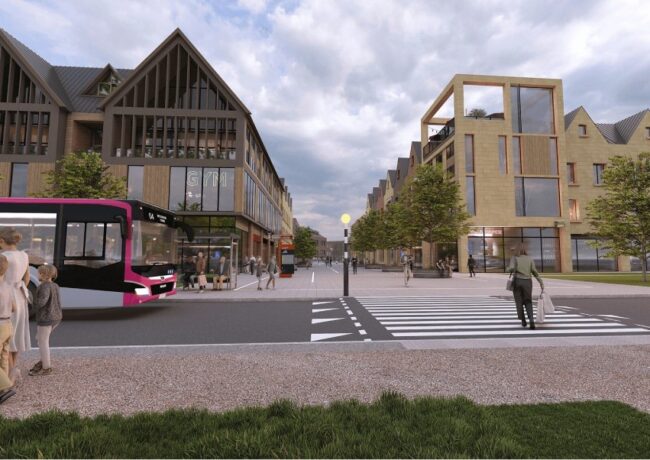
The investment business has taken the first steps towards a potential second data centre in the south east Northumberland village, with construction expected to take around two years if the scheme progresses.
The proposals are at an early stage, with the company having sought a screening opinion from Northumberland County Council on whether the development would require an Environmental Impact Assessment.
The council has now confirmed that a full EIA will be required, concluding that the proposed data centre and associated development could give rise to significant environmental impacts.
Tetra Tech Consulting Services, acting for TBC Partners, has prepared the EIA screening report.
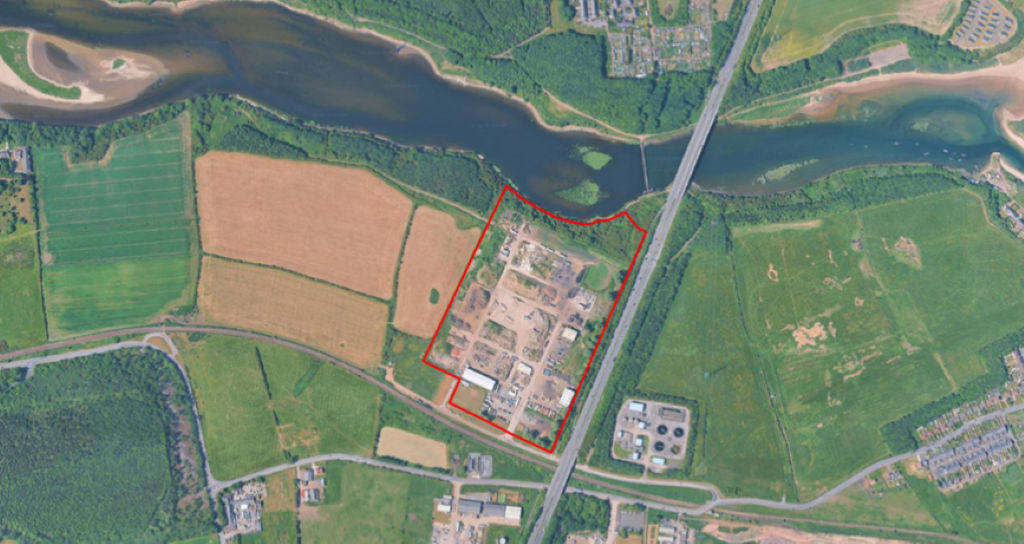
Located on Factory Road on 30 acres immediately south of the River Wansbeck and alongside the A189, the site is currently occupied by HFF Aggregates and Civil Engineering and is used for the storage of recycled and secondary aggregates, timber supplies, plant and machinery, and hire and haulage operations.
It was formerly occupied by a pharmaceutical plant, with buildings and warehouses demolished between 2009 and 2013.
The proposals under consideration include one or two data centre buildings, with a combined footprint of between approximately 6.2 and 9.1 acres.
The buildings could reach up to 30m in height, with an external generators yard and substation covering a further approximately four acres.
The development would also include a service road, security gatehouse, perimeter fencing, CCTV and lighting, landscaping, and drainage measures.
Construction is expected to take approximately 24 months, with occupation and operation anticipated between 2030 and 2035.
The scheme would add to a rapidly expanding cluster of data centre proposals around Cambois, Blyth and West Sleekburn, with the QTS campus already having planning permission.
The council’s screening opinion highlighted the potential for cumulative impacts from other major data centre developments planned or already approved in the surrounding area.
These include the QTS hyperscale data centre campus, around 500m to the south east, for which planning permission has already been granted. That £10bn scheme will involve the redevelopment of around 252 acres of former power station land for up to 10 data centre buildings, each providing around 72MW of IT capacity.
A separate scheme immediately west of the TBC Partners site is also awaiting determination. Wansbeck Regeneration Ltd has submitted an outline application for a data centre development with a proposed 384MW operational capacity, comprising three data centre buildings with a combined gross internal area of approximately 3.84m sq ft, alongside substations and power infrastructure.
The council said there was insufficient information to establish the scale of cumulative impacts on the highway network and protected sites.
It also raised concerns over the potential emissions from generators at the different data centre schemes operating simultaneously during a local or regional power cut.
The council therefore concluded that the likely environmental impacts of the TBC Partners proposal would be sufficiently significant to require an Environmental Impact Assessment.
The proposed data centre would use closed-loop, air-cooled systems, subject to detailed design, with the aim of reducing water consumption. The developer also said it intends to explore opportunities for supplying waste heat to an off-site district heating network in combination with other data centre developments in the area.
It comes as Conservative leader of Northumberland Council, Glen Sanderson, warned at a recent meeting: “We very much welcome the £10bn investment in Cambois which will benefit all the county through the £110m growth fund.
“However, there is a limit to how many data centres could be put in Northumberland.
“We have had some representations and they will be judged carefully. There are two more at the minute in the early stages that we will be looking at very carefully.
“We went through a period of time 10 years ago where there was a plethora of wind turbine applications. We had to get to a stage with planning that talked about overdevelopment and overcapacity, which did reduce the amount of successful applications.
“I think it is fair to say that most members here are keen not to see overdevelopment of data centres. It’s not that we can stop developers putting in applications, but I’m keen to know what members think about that large-scale development, which we want to see – but not at any cost.”