



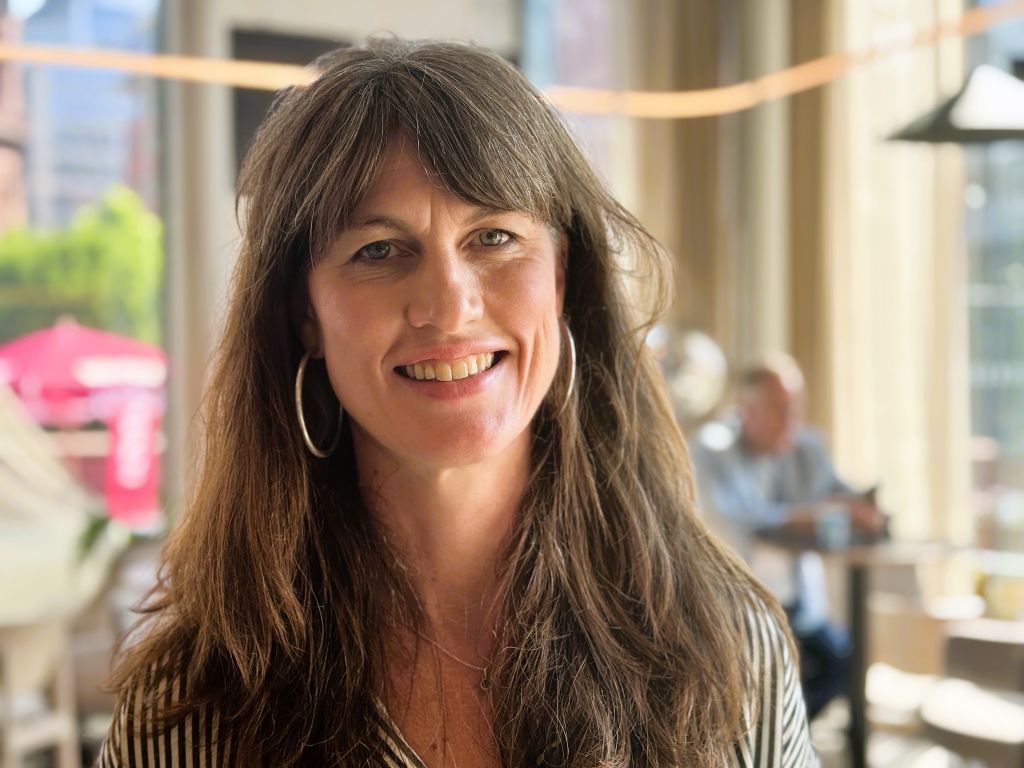
Green Party would radically change how we deliver housing
The current profit-based model for building housing has not worked, argued the party’s deputy leader Rachel Millward at Housing 2026 in Manchester. Her solution is this: a new approach that focuses on housing as a human right and as public infrastructure.
“It seems completely illogical that you could find a way out of a housing crisis with housing targets that don’t respond to housing need,” Millward told a crowd of property professionals and politicians on Wednesday morning as part of a panel discussion.
“It’s build, build, build – but build what? It’s build luxury, unaffordable homes that aren’t solving the problems of ordinary people,” she continued.
“There’s just a radical disconnect there. I think we know, because we’ve been trying this for decades, that this doesn’t solve the problem. In fact, it exacerbates it and we end up with what should be ‘homes’ being more ‘investment vehicles’.”
The fact of the matter is this, Millward said: “Housing is a human right and housing, first and foremost, is to give people a roof over their head.”
Millward said a Green government would look to make a “radical investment in social housing.”
“We don’t think the market can solve this problem,” she said.
The money for this investment would come from changing the taxation model, taxing the ultrarich, equalising capital gains tax and income tax, and transforming the current council tax model into a land value one.
“It is a fairer system, and it does generate a lot of money to invest,” she told Place in an interview after her panel appearance.
Also on the Green housing agenda: a brownfield first approach, the end of right to buy, and a focus on retrofit.
One of the main standout changes for Millward is adding a social housing target.
“It’s actually genuinely strange to me that we don’t have a social housing target,” Millward said.
“It is very weird as a council Leader, telling your residents you just have to [approve plans] because the government’s told you to build X number of houses,” she continued.
“It’s like, for what? It’s not for communities. It’s not for the people who need the housing. It gives developers profit and it changes land owners’ fortunes for generations, frankly.”
She referred to the current government’s system of housing targets and ‘Build, Baby, Build’ as another form of trickle-down economics that hopes that adding more homes will cause people to move and free up more affordable housing for someone else.
“That just is not what’s happening,” she said. “That’s not happened for two, three decades. The problem has gotten worse and worse and worse – so that idea is disproven and we just need to be real about that.”
Targets are especially on Millward’s mind as she is in the middle of crafting a local plan for Wealden District Council, where she is Co-Leader.
Place asked Millward how she would reshape the local plan process. She said she would do away with the current system of calling for sites and making proposals based around that. That is because in her experience there are a very limited number of sites coming forward and the infrastructure may not be in place to support them. She would rather be proactive about finding the best sites for delivery.
“You would have a huge amount of public consultation,” she said. “You’d also have, obviously, planning experts looking very carefully at the area. You would think: where are the best places for housing? How do we build community? How do we make sure that people don’t have to travel far? We’d look at it all strategically and have that input.”
As for the planning committee system, Millward is an advocate for it. Councillors, she said, are not the blockers for housing delivery. She pointed to there being thousands of homes with planning permission in her council area that have yet to start on site.
The committee process makes projects better, she contended. Conditions are added; improvements are made. And sometimes, she said, the project is just not good enough.
Public opposition to building affordable housing on brownfield sites does happen, she conceded. But this could be mitigated with better communication and engagement.
“There is a danger of just really patronising communities and assuming that all people are basically pretty selfish NIMBYs,” she said. “I don’t find that to be true.
“What I do think is true is that if there is a communication vacuum, then what fills it is hostile, polarising, and angry.”
In her opinion, presenting people with the facts and the choices in front of them can go a long way. It will not convince everyone, but it will win over many.
“Most people are actually pro greater good,” she said.
At the end of the day, Millward was clear about one thing. Change needs to happen or the housing crisis will just continue year after year.
“If we want to build the housing that the future generations need, we need a different system,” she said. “We really do.”