


Thinking outside the Greenbox | Q&A with Alex Reynolds
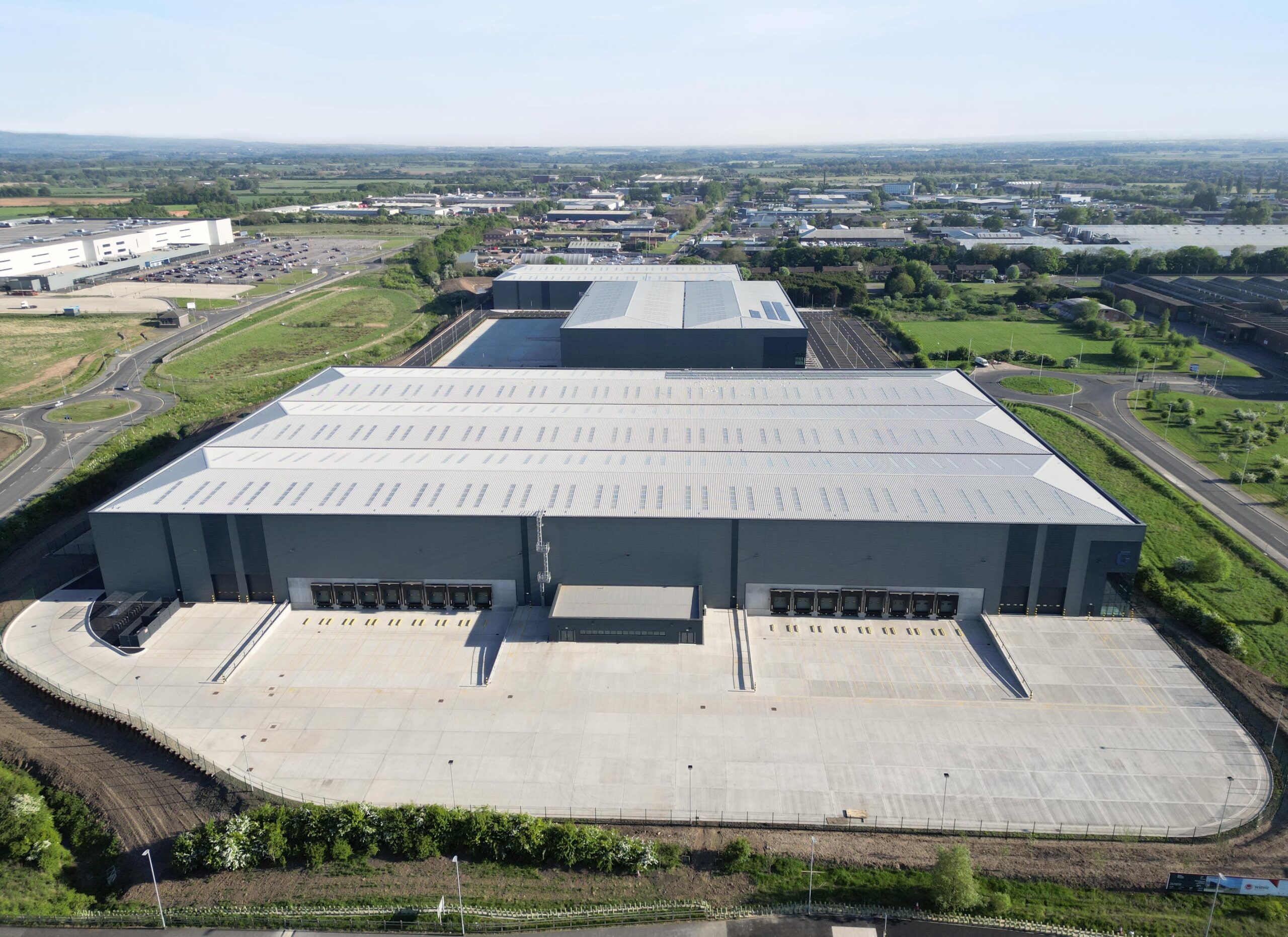
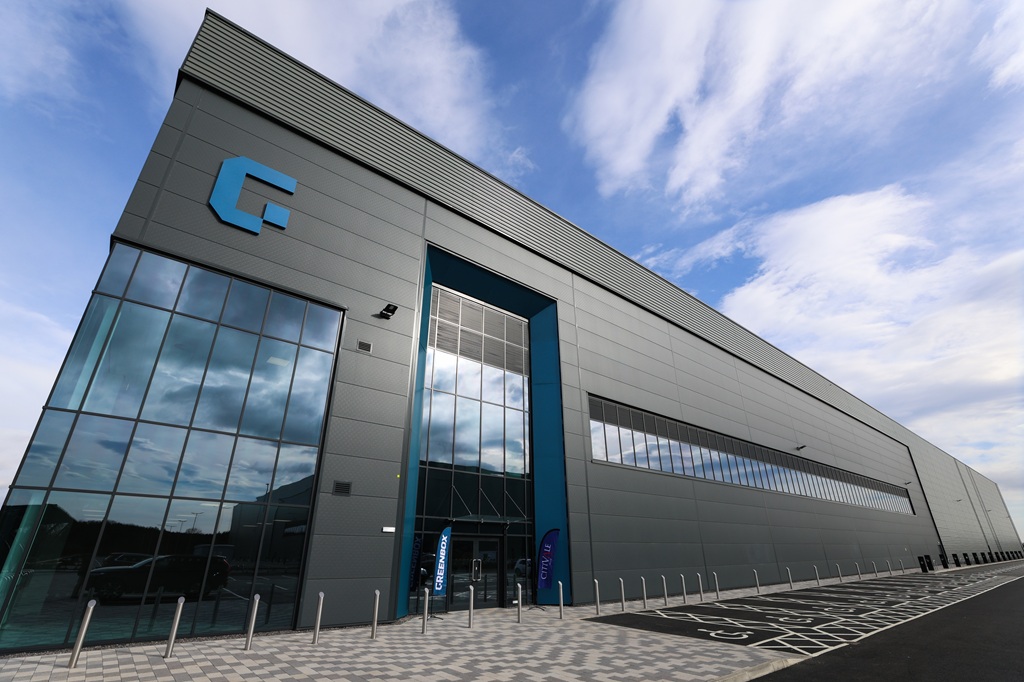
Place North East spoke with Citivale’s development director about the recently completed Greenbox Darlington, a speculatively built 408,000 sq ft Net Zero logistics hub that is redefining sustainability in the shed sector. From carbon neutral construction to operational green credentials, we delved into how things work when sustainability is front and centre.
Greenbox is a joint venture between Citivale and real estate investor Partners Group.
When did Citivale and Partners come up with the idea for Greenbox – what was the timeline, from having the idea to putting it into action?
The idea for Greenbox came out of our ambition to create a platform that put sustainability at the heart of logistics development rather than treating it as an add-on. Our first project was in Thirsk, which set the tone for what we wanted to achieve, and Darlington followed soon after when we acquired the site at the end of 2023. By April 2024 we’d broken ground, and less than a year later we handed it over in March 2025.
When we’re looking at sites, we focus on strategic connectivity, established local industry, and how planning-ready the land is, so we can move quickly to the delivery phase and offer the space as soon as possible to occupiers.
How many Greenbox developments are there currently, and where will you next be targeting as a location?
At the moment we have two Greenbox schemes – Thirsk, which was our debut project with outline consent for 800,000 sq ft, and Darlington, which is our first completed development, totalling just over 400,000 sq ft.
We see these as a proof of concept that the market wants high-spec, genuinely sustainable logistics space, proven by an early letting of 100,000 sq ft to Wolseley at Darlington. Our focus now is on replicating that model in other strategic regions throughout the UK, with me currently analysing a number of opportunities for possible acquisition. Watch this space!
What made you choose Darlington as a site to invest in and how much did it cost to develop?
Darlington ticked all the right boxes for us – it’s highly visible, strategically located near the A1(M) and A66, and sits within a strong industrial and logistics ecosystem. There’s a real shortage of quality accommodation in the Tees Valley, so we knew demand would be there.
While we don’t disclose development costs, the investment reflects our belief in the region and in the strength of the Greenbox model. I would also like to add that Darlington Borough Council could not have been more helpful and responsive to us, and really understood and appreciated what we were trying to achieve.
The green credentials for the site are the ‘core principle, not an afterthought’. What green technologies or innovations did you use in developing the scheme?
Sustainability shaped every decision on this project. We used LPG [liquified petroleum gas] on-site during construction to cut emissions, installed air-source heat pumps for heating, and made the roofs 100% solar-ready.
EV charging points were integrated into the car parks with the capacity to scale up, and the scheme achieved BREEAM Excellent and EPC A ratings. All of this ensures Darlington is truly future-proofed and operating at the highest environmental standards, and was one of the reasons why Wolseley picked our scheme over some our competitors.
To put it into context, we achieved massive carbon savings on the project, with nearly 12,000 tonnes of CO2e emissions avoided when compared to traditional construction; that’s the equivalent to taking 6,500+ petrol cars off the road for a year or planting 195,000 trees and letting them grow for 10 years.
What were the key challenges involved with achieving the ambitious environmental targets, and how will you ensure the hub remains at the forefront of sustainability in the future?
The biggest challenge is always finding the balance between building sustainably and delivering on time and on budget, but we made it work by embedding ESG principles from the outset. That meant working closely with the supply chain and making sure every element of the build supported our Net Zero goals. For example, we managed to balance the earthworks to avoid unnecessary material exports or imports, 279 tonnes of construction waste was recycled – that’s a 100% landfill diversion rate, and the structural frame used 99% recycled steel.
Looking ahead, the scheme’s future-proofed infrastructure – from EV capacity to solar-readiness – will keep it aligned with both regulatory changes and tenant expectations.

How does viability and finance work when sustainability is at the core of a project – is it more challenging to finance and develop, and how to you go about ensuring a scheme remains viable?
There’s no doubt that building to such a high sustainability standard comes with extra challenges, but it also opens up opportunities. More investors and occupiers are prioritising ESG credentials, so green developments often command stronger demand and better long-term value.
The key is integrating those features smartly from day one, rather than trying to bolt them on later, which makes the whole scheme more cost-effective and commercially viable. At Darlington, for example, we have provided an element of PV on the roof specifically for the benefit of the occupier, which allows the occupier to easily add to this should they want to.
Will Citivale be implementing any technologies or lessons from the Greenbox schemes into its other logistics developments?
Absolutely. Greenbox was designed as a replicable model, and what we’ve delivered at Darlington – from PV-ready roofs to air-source heat pumps and EV charging infrastructure – will feed directly into future schemes. Importantly, we also learned a lot from the construction process itself through partnering with main contractor, Winvic Construction, particularly around achieving Net Zero in operation and in construction.
We’re delighted that Darlington has been recently selected to take part in the UK Net Zero Carbon Buildings Standard pilot, resulting in us contributing to shaping the benchmark for net zero in the logistics sector. By participating, Citivale is helping to define a clear, credible framework for what net zero buildings should look like in the UK, reinforcing our commitment to sustainable development and meaningful carbon reduction across the built environment.
The results and those lessons will shape everything we do going forward.
Sustainability aside, what are the other key trends that you’re seeing across the industrial and logistics market at the moment?
There’s still a very strong demand for grade A logistics space, particularly in regions where supply is limited. We’re also seeing occupiers place increasing value on last-mile distribution hubs as supply chains continue to evolve.
More broadly, speed of delivery and modal connectivity – whether it’s links to ports, airports, or major roads – are becoming as important as the buildings themselves. Aside from that, the key fundamentals for occupiers still are about power (resilience), labour pool, locality, and a building’s long term performance.
Does the North East logistics market have any particular challenges or opportunities that are different to other markets in the UK?
The North East presents a huge opportunity because there’s a real shortage of high-quality, sustainable logistics stock, which creates strong demand. It’s also supported by a fantastic industrial base with companies like Tata Steel and Cummins anchoring the market.
Add to that the transport connectivity – with easy access to ports, airports, and the A1 and A66 – and you’ve got a compelling case for investment that sets the region apart.